How thoughtful design creates homes that feel beautiful today — and remain relevant for years to come. There is something quietly powerful about a home that does not seem to belong to a particular year. It does not announce the trend of the moment. It does not depend on a colour that is suddenly everywhere, or a furniture style that will feel dated in a few seasons. Instead, it feels considered. Personal. Almost effortless. This is the essence of timeless design. At HARV Atelier, we believe a beautiful interior is not simply a collection of beautiful things. It is an environment shaped around the people who inhabit it — their rituals, memories, personalities and aspirations. A timeless home is therefore not one that refuses to change. It is one that allows life to change around it. Interior design has become increasingly visual. With social media, inspiration is everywhere, and new aesthetics appear almost daily. Quiet luxury. Organic modern. Japandi. Minimalism. Maximalism. There is nothing inherently wrong with trends. They can introduce fresh ideas, materials and ways of living. But when an entire home is designed around a particular aesthetic, there is a risk that the space begins to resemble an image rather than a home. Timelessness asks a different question: The answer lies not in avoiding contemporary design, but in knowing where to use it — and where to let permanence take precedence. Timeless interiors rarely need to shout. Walls in warm whites, mineral tones, muted greens, soft taupes and earthy neutrals create a visual foundation that can evolve with the homeowner. They provide space for furniture, art, textiles and objects to become part of the story. But neutral does not mean colourless. The most sophisticated neutral interiors are built through variation — the subtle difference between limestone and plaster, walnut and oak, linen and boucle, brushed metal and aged brass. The result is depth without visual noise. A restrained palette also gives a home something invaluable: longevity. Furniture can change. Artwork can move. A new chair can be introduced. Seasonal textiles can bring colour. The architecture continues to hold everything together. A timeless interior is experienced as much through touch as through sight. Natural stone carries variation that no printed surface can perfectly reproduce. Timber develops character as it ages. Linen softens. Cane and rattan introduce rhythm and tactility. Handmade ceramics carry the subtle irregularities that make them feel human. These materials do not need to compete with one another. They need to converse. A honed stone beside warm timber. Linen against a textured wall. A hand-finished ceramic placed on an antique-inspired console. A woven chair catching the afternoon light. This is where an interior begins to feel layered rather than decorated. Good materiality creates atmosphere before it creates aesthetics. The most beautiful room in a house can become the least successful if it does not work for the people using it. Timeless design therefore begins with observation. Where does the family gather in the evening? Where does someone naturally put their keys? Does the dining table need to accommodate intimate dinners or large gatherings? Is there enough concealed storage? Where does morning light enter the bedroom? How does the home change when guests arrive? These questions may sound practical, but they are at the heart of meaningful design. A well-designed home should make everyday life feel easier without making that functionality obvious. Storage should disappear into the architecture. Lighting should adapt to different moments. Furniture should encourage conversation. Circulation should feel intuitive. When function is resolved beautifully, it becomes almost invisible. Perhaps one of the simplest ways to create an interior that feels timeless is to create a relationship with the natural world. Natural light. Indoor plants. Stone. Wood. Organic forms. Handcrafted materials. These elements have an inherent ability to soften a space. A sculptural branch in a ceramic vessel can bring more life to a room than an entire shelf of decorative objects. Morning sunlight moving across a textured wall can become part of the architecture. This connection to nature is particularly meaningful in contemporary homes, where technology and urban living can sometimes make our environments feel overly controlled. Nature introduces imperfection — and imperfection introduces warmth. Timeless homes are rarely defined by how much they contain. They are defined by what deserves to remain. A beautifully crafted dining chair. A piece of art discovered while travelling. A vintage lamp inherited from family. A handwoven rug. A sculptural coffee table. A ceramic made by an independent artisan. Objects with character create a sense of belonging that mass-produced decoration cannot easily replicate. This does not mean every object needs to be expensive. It means every object should have a reason to be there. When a room is allowed to breathe, individual pieces gain importance. The eye notices texture. Craftsmanship becomes visible. Memories have somewhere to live. One of the most underestimated elements of residential design is lighting. A room can have beautiful furniture, exceptional materials and carefully considered colours — yet still feel flat if the lighting has not been designed with equal intention. Timeless lighting is layered. Ambient illumination creates the overall atmosphere. Task lighting supports everyday activities. Accent lighting draws attention to art, architecture or material details. And then there is natural light. The movement of daylight throughout the day can completely transform an interior. Curtains, blinds, wall finishes and furniture placement should therefore be considered alongside the orientation of the home. The goal is not simply to make a room brighter. It is to make it feel different at different times of the day. A timeless home should not be perfectly coordinated. In fact, a little tension is often what gives an interior its personality. A contemporary sofa beside an antique-looking cabinet. A traditional Indian textile against a restrained modern backdrop. A sculptural contemporary light over a classic dining table. A bold artwork in an otherwise quiet room. This is where eclecticism becomes powerful. The objective is not to mix everything. It is to create contrast with intention. When different eras, cultures and materials are brought together thoughtfully, a home can feel collected rather than constructed. And collected spaces tend to have stories. Perhaps the greatest measure of good interior design is not how impressive a home looks on the day it is completed. It is how naturally it continues to belong to its occupants five, ten or fifteen years later. Life changes. Families grow. Careers evolve. Children become adults. Tastes mature. Objects are collected. Memories accumulate. A successful interior makes room for all of this. It does not attempt to freeze a particular moment in time. It creates a framework within which life can unfold. That is what we mean by timeless design at HARV Atelier. Not a rigid aesthetic. Not the absence of contemporary influence. But a thoughtful balance of architecture, materiality, function, craftsmanship and individuality — creating spaces that feel deeply personal today and continue to feel right tomorrow. Because ultimately, the most luxurious thing a home can offer is not perfection.The Art of Timeless Living
Beyond the Language of Trends
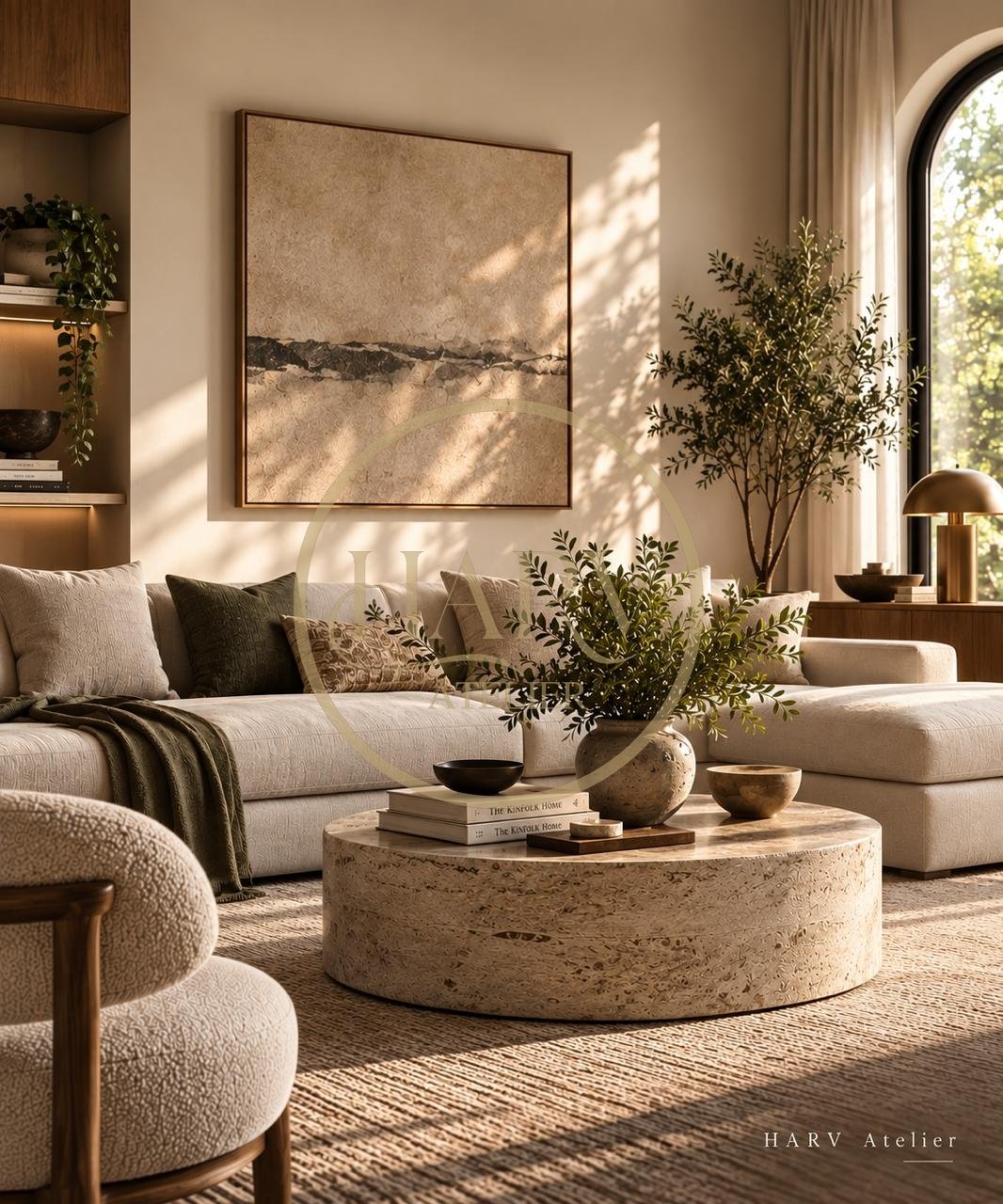
01 — Begin with a Quiet Foundation
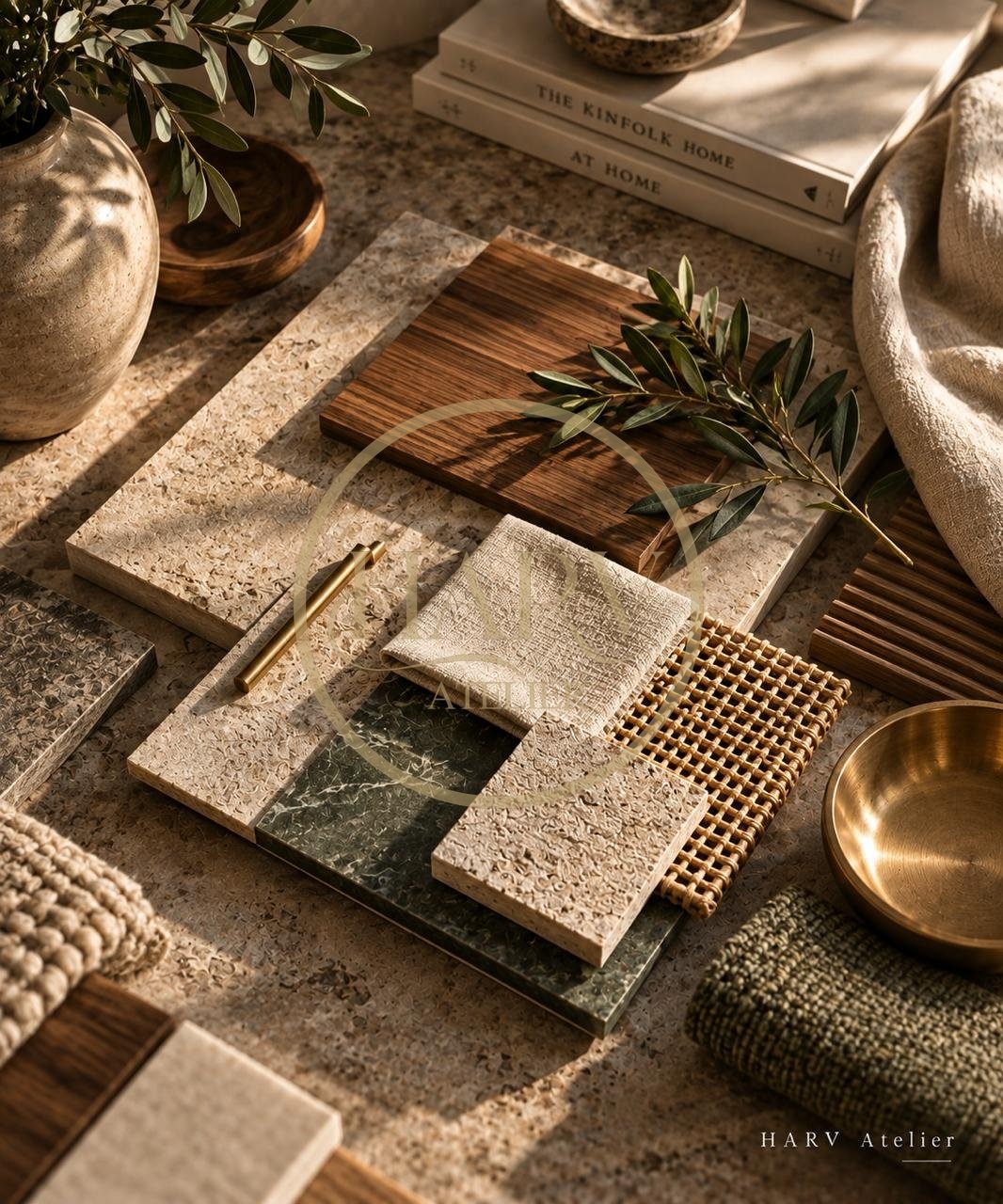
02 — Let Materials Do the Talking
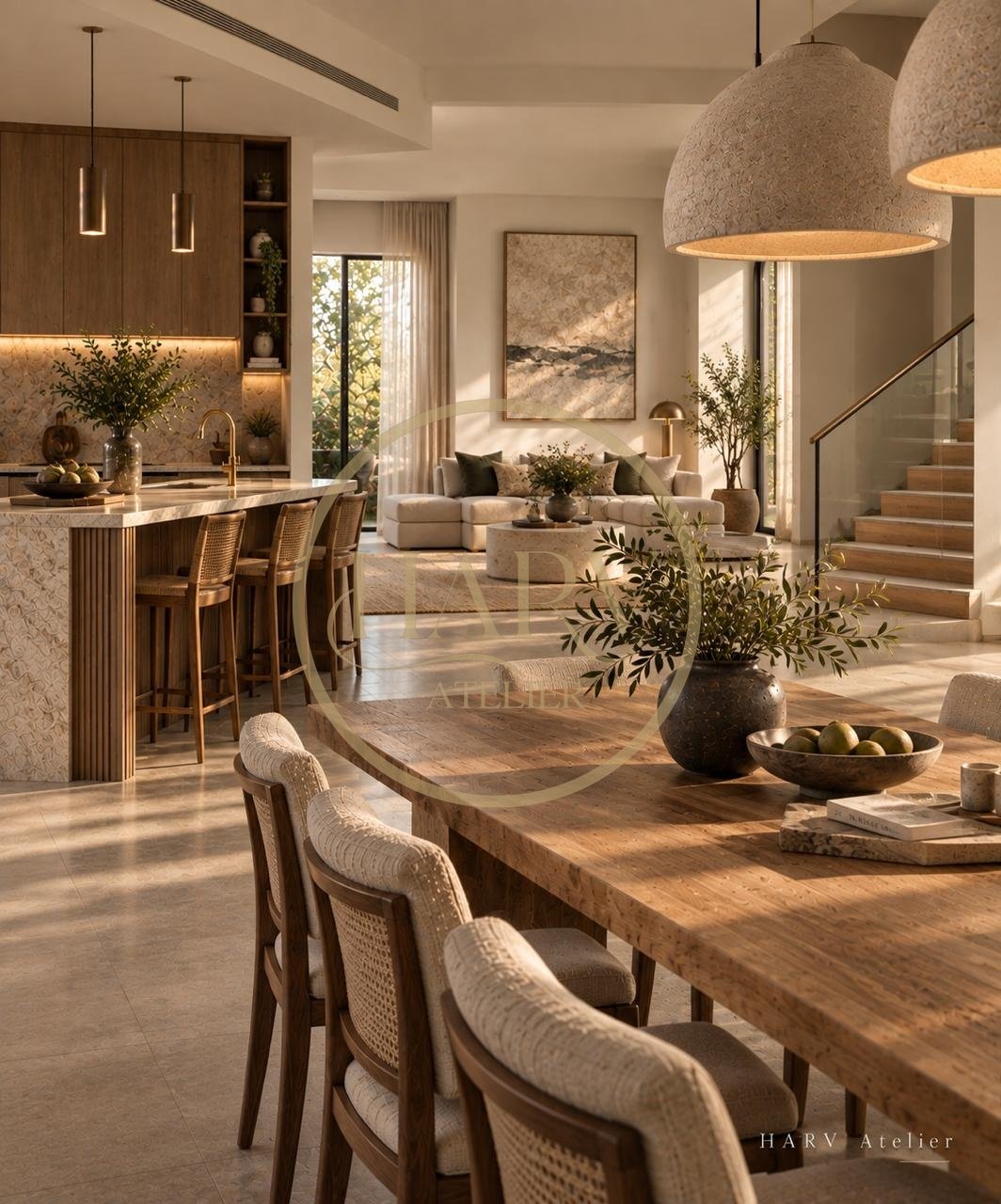
03 — Design Around the Way People Actually Live
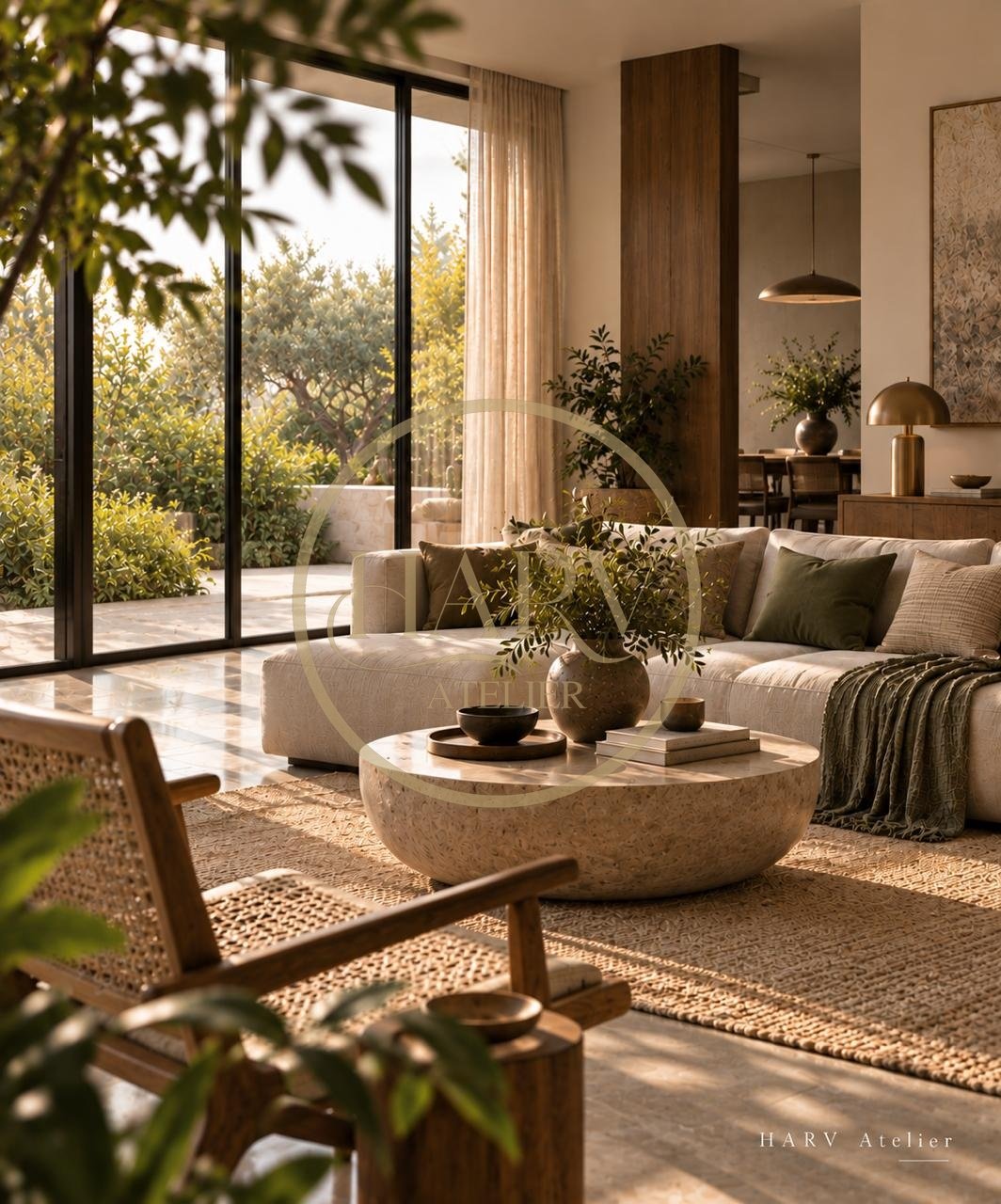
04 — Bring Nature Indoors
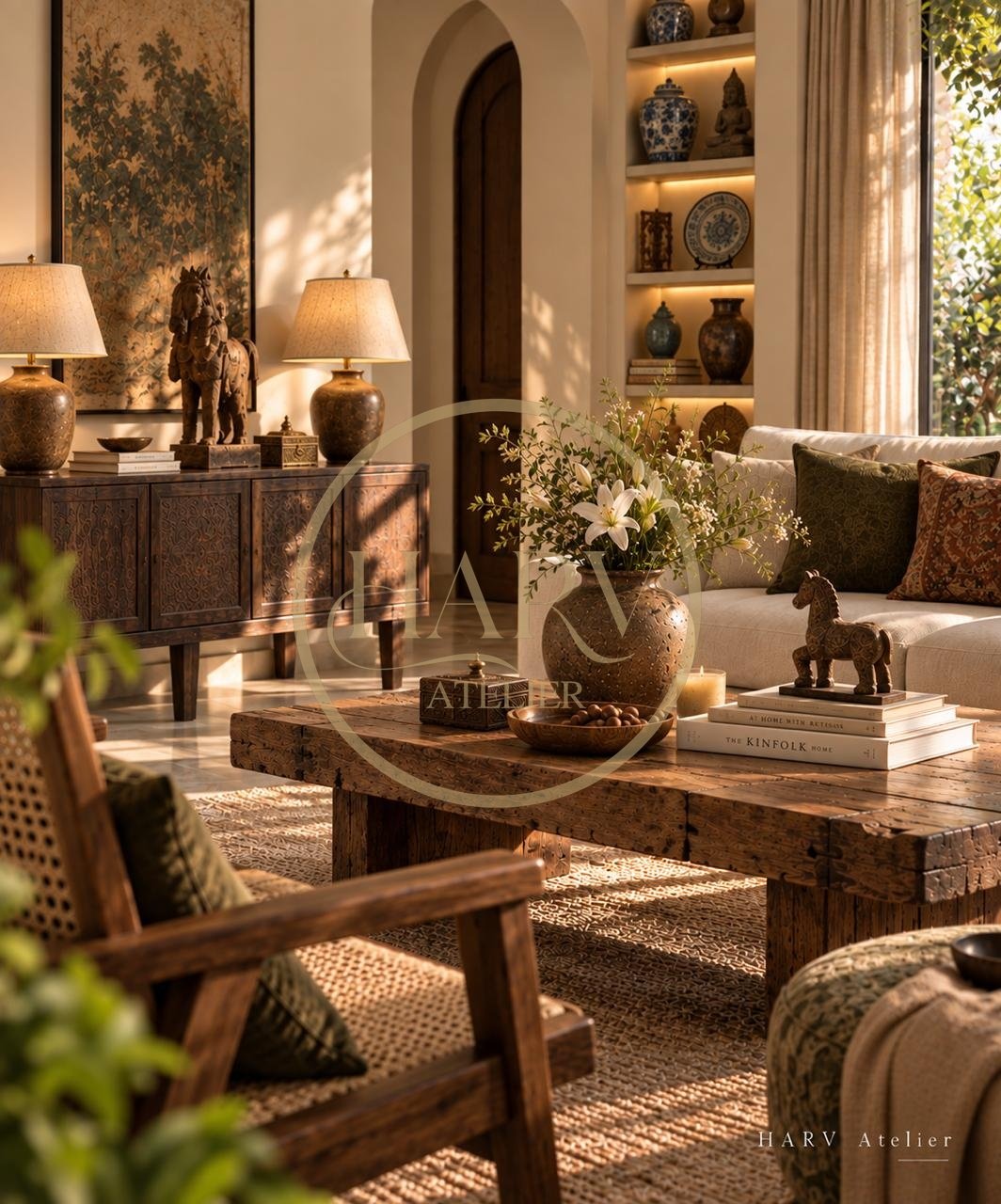
05 — Choose Fewer, Better Things
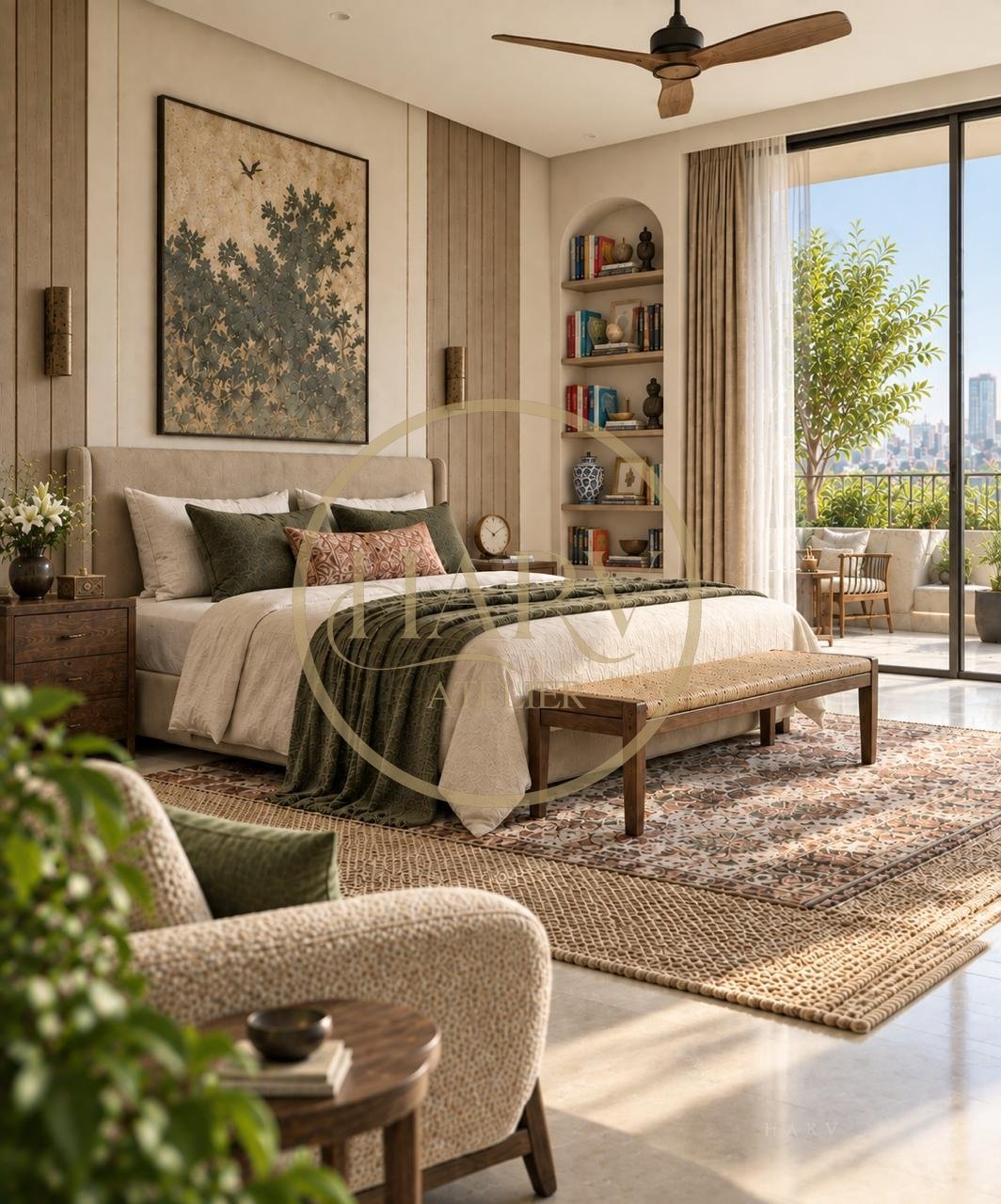
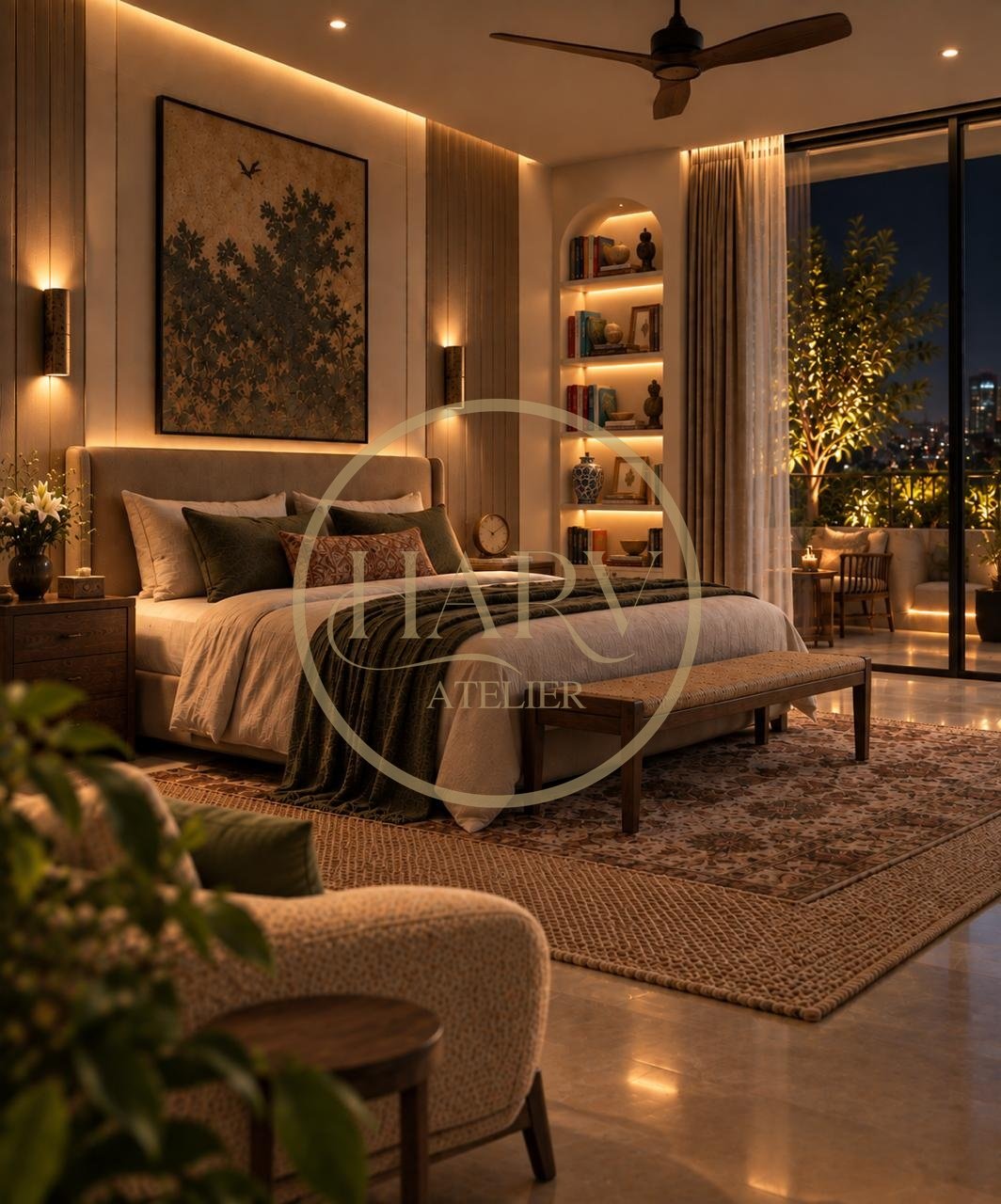
06 — Lighting Is Part of the Architecture
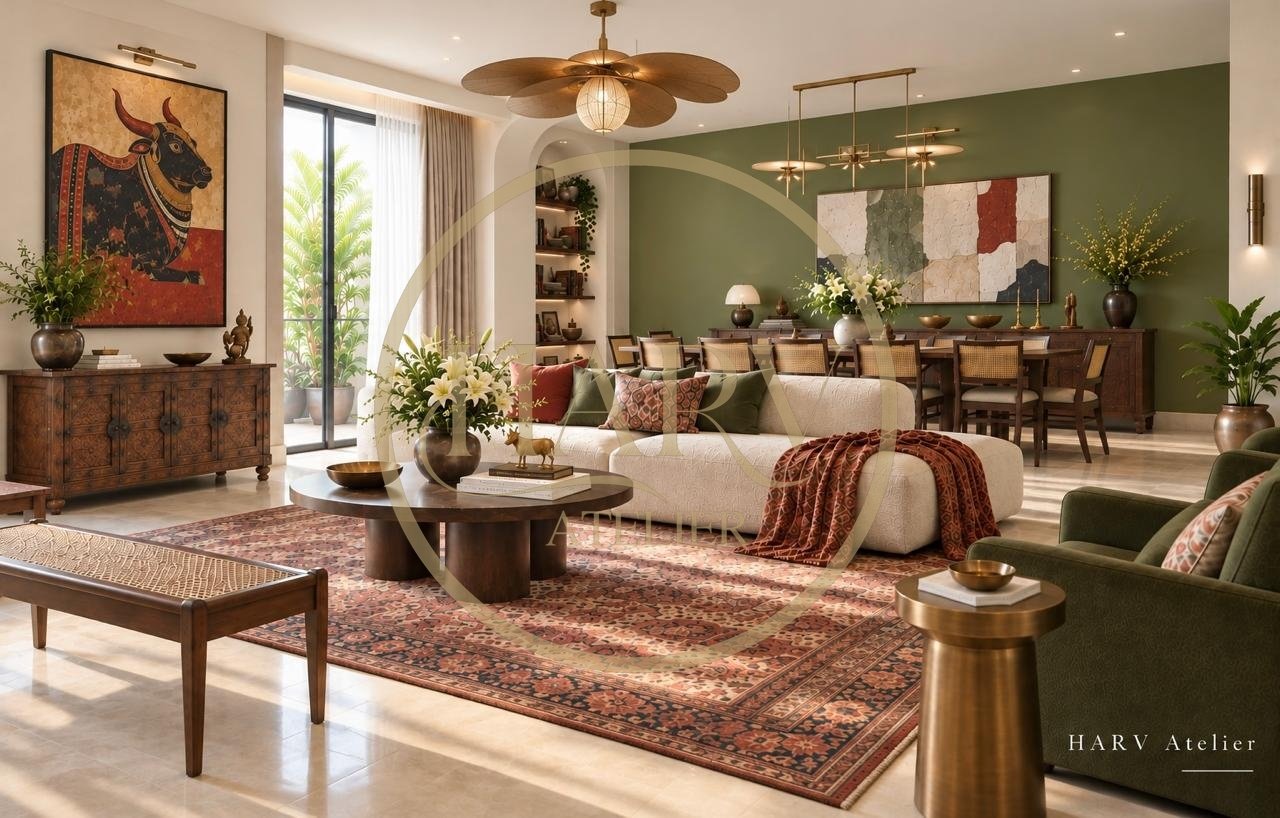
07 — Leave Room for the Unexpected
A Home That Grows with You
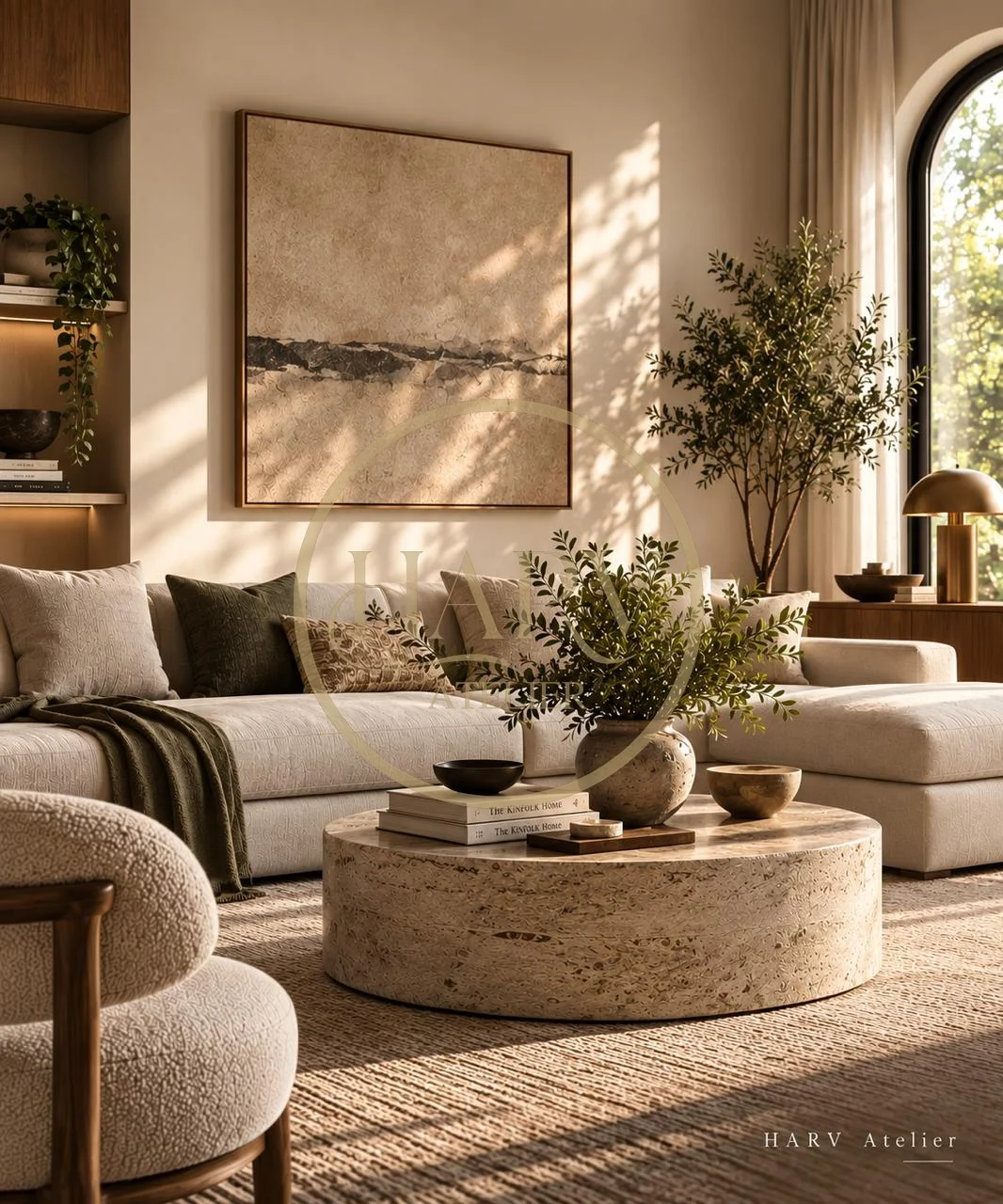
Will this still feel like me ten years from now?
It is belonging.